Cost-Effective Cloud Licensing for SMBs
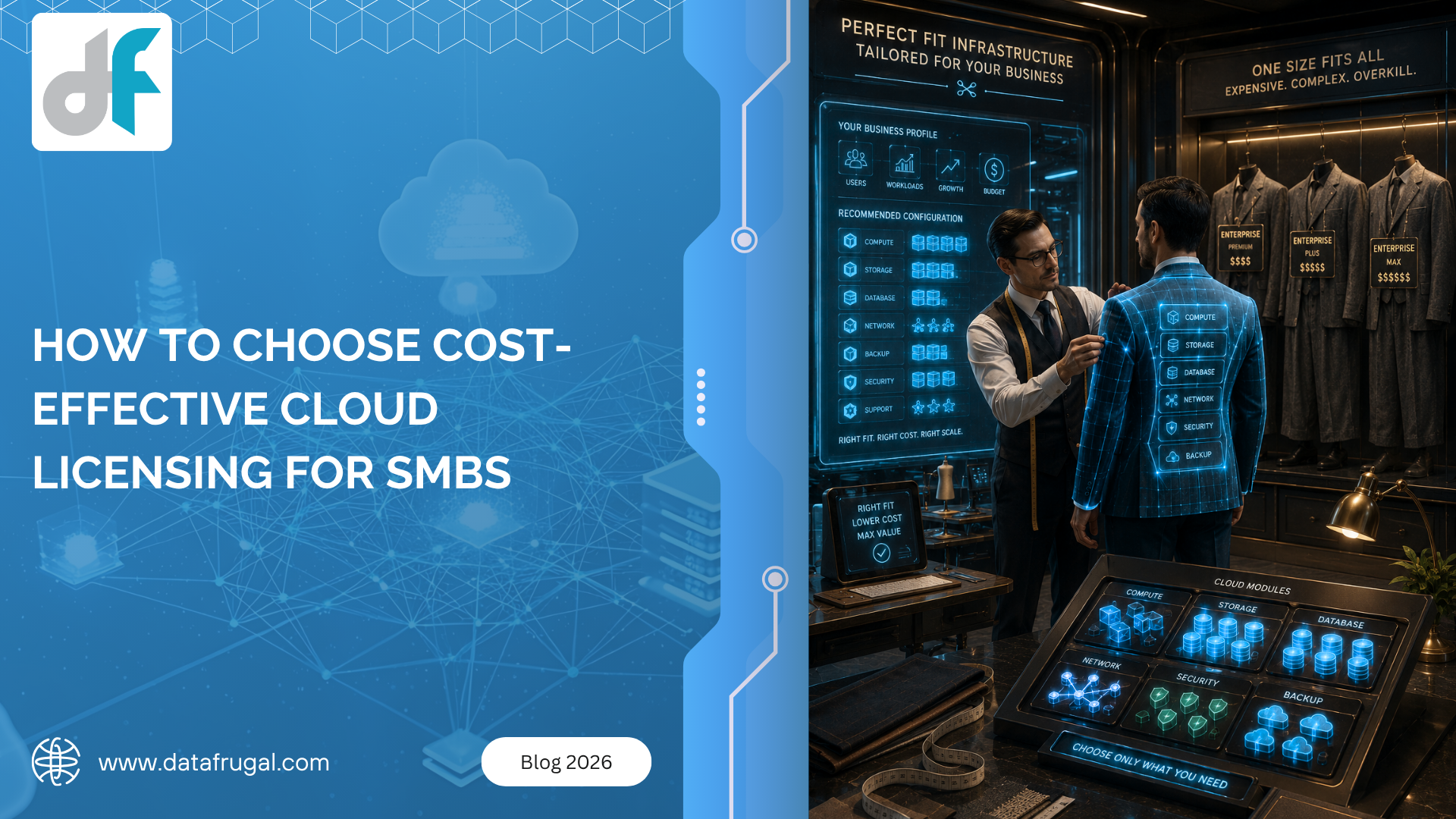
How to Choose Cost-Effective Cloud Licensing for SMBs
Cloud licensing determines how businesses pay for cloud infrastructure, storage, applications, and services. For SMBs, choosing the right licensing model is critical because cloud costs can increase quickly as systems scale.
Many businesses move to the cloud expecting lower operational costs, only to discover that pricing structures are often difficult to predict. Storage tiers, API calls, backup retention, data transfer, and user-based pricing can all contribute to rising expenses over time.
Choosing a cost effective cloud license is not just about selecting the cheapest provider. It is about finding a licensing structure that aligns with operational needs, growth plans, and long-term cloud usage.
For SMBs with limited budgets and smaller technical teams, this decision directly impacts scalability, operational efficiency, and profitability.
Why cloud licensing becomes expensive for SMBs
Many SMBs realize cloud costs are becoming a problem only after receiving unexpectedly high monthly bills caused by storage growth, recovery data retention, API requests, or cross-region data transfer.
As workloads increase, integrations expand, and cloud environments become more distributed, storage usage and operational consumption become harder to track.
Cloud pricing often becomes expensive because businesses lack visibility into how resources are being consumed.
Common reasons SMBs overspend on cloud licensing include:
- Paying for unused storage or inactive resources
- Retaining unnecessary backup versions or development logs
- Scaling infrastructure without structured governance
- Choosing licensing plans based on short-term needs only
- Lack of visibility into data movement and storage consumption
- Difficulty tracking costs across multiple cloud services
As systems grow, small inefficiencies compound into larger operational costs.
Why scalability matters in cloud licensing
A cloud environment should support business growth without forcing constant licensing changes or operational disruption.
This is where scalable cloud pricing becomes important.
Scalable pricing allows SMBs to:
- Expand infrastructure gradually
- Pay based on actual usage patterns
- Avoid large upfront commitments
- Manage storage growth more predictably
- Add services without rebuilding infrastructure
However, scalability without governance can still increase long-term costs.
Many SMBs adopt flexible pricing models but fail to control how data is stored, retained, or duplicated across environments.
This creates hidden operational expenses over time.
The problem with comparing cloud pricing
Many businesses compare cloud providers based only on advertised pricing. In reality, cloud pricing structures are far more complex.
Costs often vary based on:
- Storage tiers
- Data transfer and API usage
- Backup retention duration
- Multi-region replication
- Recovery operations
- User access and security controls
- Cross-cloud integrations
This is why businesses increasingly rely on cloud pricing comparison tools to estimate operational costs more accurately.
However, pricing comparison alone is not enough if businesses do not understand how their own data lifecycle affects long-term cloud usage.
What SMBs should evaluate before choosing a cloud license
Choosing the right cloud licensing structure requires operational planning, not just cost comparison.
SMBs should evaluate:
Storage and backup growth
Critical application logs, audit records, backups, and production data grow continuously. Without retention policies, storage costs rise quickly.
Multi cloud or client requirements
Some SMBs work with customers or partners already operating on specific cloud providers. This may require multi cloud support instead of relying on a single provider.
Governance and access control
Poor governance often increases operational complexity and security risks.
Businesses should prioritize environments with:
- Structured role-based access control
- Clear backup retention policies
- Visibility into stored data
- Centralized governance and audit visibility
DevOps dependency
Some cloud environments require extensive manual configuration and ongoing management.
SMBs with smaller teams benefit from platforms that reduce operational dependency on experienced DevOps resources.
Why budget-friendly cloud solutions require governance
Many businesses focus only on reducing infrastructure costs while ignoring governance and operational efficiency.
In reality, strong governance often reduces long-term cloud expenses more effectively than switching providers.
Structured budget-friendly cloud solutions should help businesses:
- Prioritize storage of critical data only
- Avoid duplicate or unnecessary retention
- Organize production, staging, and development data separately
- Improve visibility into storage consumption
- Simplify access control and backup governance
- Reduce operational complexity across environments
The goal is not just cheaper cloud infrastructure. It is predictable and controlled cloud growth.
How DataFrugal helps SMBs optimize cloud licensing
DataFrugal helps SMBs improve cloud storage governance and operational visibility across cloud environments.
Instead of managing storage, backups, and retention separately across providers, businesses can organize and govern their cloud data through a structured layer.
DataFrugal helps SMBs:
- Avoid long-term retention of unnecessary backups and duplicate data which quietly increases cloud costs over time.
- Use audit tracking to identify the origin of data, categorize it, and improve storage efficiency.
- Improve visibility into what data exists, where it is stored, and who has access to it.
- Reduce dependency on complex IAM configurations with predefined access roles and governance policies.
- Manage client or multi cloud environments more consistently using pay-as-you-use models.
- Reduce operational dependency on dedicated DevOps and support resources for routine governance tasks.
- Apply retention and governance policies without restructuring existing cloud infrastructure.
This helps businesses improve cost efficiency while maintaining operational control and scalability.
Summary
Choosing a cost effective cloud license requires more than comparing provider pricing. SMBs need licensing structures that support scalability, governance, visibility, and long-term operational efficiency.
Without structured data management, cloud costs can increase rapidly through unnecessary storage growth, fragmented visibility, and inefficient retention practices.
Businesses that combine scalable pricing with strong governance and operational visibility are better positioned to control cloud costs as they grow.
FAQs
Q 1. What gotchas should SMBs look for while choosing cloud licensing?
Cloud licensing can be perpetual or subscription based. If usage is predictable and long term, perpetual licensing can sometimes become cheaper over time.
For temporary projects, testing, research, or short-term teams, pay-as-you-use models are usually more cost effective.
Many platforms are free until the first few users or workloads, but costs increase sharply after that stage. SMBs often miss this early because initial infrastructure usage is small.
Businesses should also check for separate charges related to API requests, recovery operations, support tiers, analytics, and long-term retention.
Q 2. What should SMBs evaluate before committing to a cloud provider?
The existing tech stack, future business direction, client requirements, and internal skillset all influence long-term cloud costs.
For example, Windows-heavy environments may benefit more from Azure because of Windows licensing advantages and license pooling.
Similarly, businesses dependent on Oracle technologies may find Oracle Cloud more cost effective for database hosting.
Reserved and subscription models can save significant costs when infrastructure usage becomes predictable.
In many cases, SaaS platforms also reduce operational overhead because upgrades, support, patching, and lifecycle management are handled externally.
Q 3. What hidden costs do SMBs usually miss in cloud licensing?
Many SMBs calculate only infrastructure pricing while underestimating operational and maintenance costs.
Common hidden costs include:
- Software licensing and support renewals
- API usage and recovery operations
- Backup retention and duplicate storage growth
- Software upgrades, patching, and firewall maintenance
- Replacing end-of-life systems and outdated protocols
- Assigning full software suites to employees who may not require them
- Vendor lock-in or plans that are difficult to exit later
Over time, older systems can also become unstable, creating operational issues and affecting customer confidence.